

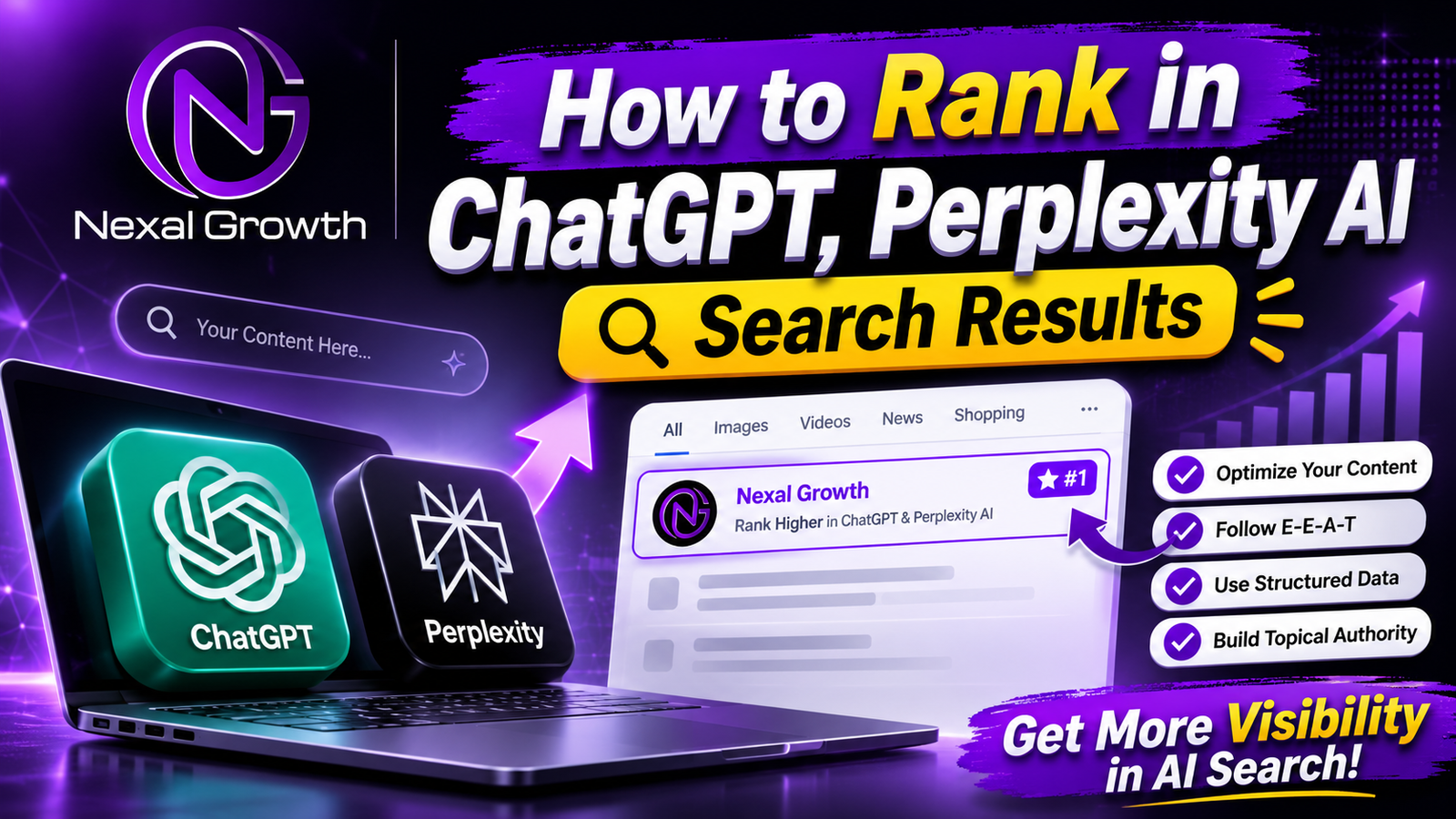
How to Rank in ChatGPT & Perplexity AI Search Results (2026)
To rank in ChatGPT and Perplexity AI search results, B2B brands must transition from traditional SEO to Generative Engine Optimization (GEO). This requires optimizing for semantic brand entity association, securing third-party digital PR citations, structuring data with schema markup, and publishing deeply authoritative, data-backed consensus content.
The Seismic Shift: From Traditional SERPs to Generative Engine Optimization (GEO)
Traditional search engine optimization (SEO) focused on keyword density, backlink quantity, and ranking on Google’s Page 1. In 2026, the discovery paradigm has fundamentally changed. Enterprise decision-makers, SaaS founders, and B2B buyers no longer scroll through ten blue links—they prompt AI engines like ChatGPT, Perplexity AI, Claude, and Gemini to generate immediate, synthesized answers.
If your brand is not embedded within the Large Language Models (LLMs) and Retrieval-Augmented Generation (RAG) pipelines that power these tools, you are invisible to the highest-intent buyers in your market.
Ranking in AI search engines requires Generative Engine Optimization (GEO)—a methodology designed to train AI algorithms to cite, recommend, and trust your brand as the definitive authority in your niche.
How AI Engines Select and Cite Sources
To rank in ChatGPT (powered by SearchGPT) and Perplexity AI, you must understand how RAG architectures evaluate online information:
- Query Processing & Retrieval: When a user enters a complex prompt, the AI decomposes it into sub-queries and fetches top-ranking context from web indexes.
- Entity Recognition & Authority Scoring: The engine scans for trusted entities, expert quotes, and structured datasets.
- Synthesis & Citation: The LLM summarizes the retrieved context, citing platforms that offer high information density, consensus verification, and clear contextual structure.
To win these citations, your content must satisfy both LLM pre-training corpora and real-time RAG web indexes.
4 Essential Strategies to Rank in ChatGPT & Perplexity AI
1. Optimize for Brand Entity & Semantic Relevance
AI models think in entities, relationships, and concepts—not isolated keywords.
- Secure listings on primary industry databases (G2, Capterra, Crunchbase, Wikipedia/Wikidata).
- Maintain consistent NAP (Name, Address, Phone/Domain) and brand positioning across all digital touchpoints.
- Publish co-occurrence content that directly links your brand name to your core solution category.
2. Implement High Information-Density Content & Original Data
Perplexity AI and ChatGPT prioritize content with a high signal-to-noise ratio. Flat, fluff-heavy copywriting is discarded by LLM summarizers.
- Integrate original survey data, proprietary benchmarks, and actionable B2B metrics (CAC, LTV, ROAS).
- Use direct, declarative statements (e.g., “Data shows X increases conversion by Y%”).
- Format content using clear headers, bulleted lists, and structured schema tags (
Article,Organization,FAQPage).
3. Master Digital PR & Third-Party Citation Networks
Generative engines rely heavily on third-party consensus to validate brand claims. You cannot simply optimize your own domain; you must control the broader digital ecosystem.
- Earn mentions in industry publications, major media outlets, and high-authority B2B blogs.
- Participate actively in platforms frequently crawled by LLMs, such as Reddit, Quora, Medium, and specialized subreddits.
- Secure podcast appearances and digital event recaps that generate transcripts ingested by search crawlers.
4. Direct Answer Formatting & Q&A Structuring
AI search engines are engineered to solve user problems directly within the prompt interface.
- Structure key sections with explicit question-based H2 and H3 tags.
- Provide immediate 40–50 word answers at the top of sub-sections before diving into granular technical details.
- Utilize clean tables and bullet points to enable seamless RAG extraction.
Strategic Comparison: Traditional SEO vs. Nexal Growth GEO Framework
| Metric / Strategy | Traditional B2B SEO | Nexal Growth GEO Framework |
|---|---|---|
| Primary Goal | Page 1 Google Organic Rankings | Citation in ChatGPT, Perplexity, & Gemini Answers |
| Core Optimization Target | Algorithms & Keyword Density | LLM Contextual Embeddings & RAG Retrieval |
| Content Structure | Long-form, keyword-padded content | High Information Density, Data-backed Consensus |
| Authority Signals | High Domain Rating (DR) Backlinks | Third-Party Digital PR, Brand Entity Association |
| KPI Measurement | Organic Clicks & Impression Share | Brand Citation Volume, Share of Model Voice, Direct Conversions |
People Also Ask (PAA) FAQs
How long does it take to start appearing in ChatGPT and Perplexity AI search results?
While traditional SEO can take 3 to 6 months to mature, GEO updates in real-time RAG engines like Perplexity AI and ChatGPT SearchGPT can yield results within 2 to 6 weeks. This depends on the indexing frequency of the target sources and the strength of your third-party digital PR footprint.
How do you measure ROI and success for AI Search Engine Optimization?
GEO success is tracked using three primary metrics: Share of Model Voice (SoMV) (how frequently your brand is cited for industry prompts), Referral Traffic from AI Domains (chatgpt.com, perplexity.ai), and Pipeline Attribution, which tracks high-intent leads who cite AI search as their primary touchpoint during discovery.
Scale Your B2B Brand’s AI Search Visibility Today
Failing to adapt to AI-driven search means leaving your market share to competitors who are already optimizing for LLMs. At Nexal Growth, we help high-growth SaaS companies and B2B enterprises engineer authority, capture AI citations, and convert search intent into predictable pipeline revenue.
Ready to dominate the next generation of search?
Book Your Free AI Search & GEO Audit with Nexal Growth Strategy Experts


0 Comments
Leave a reply