

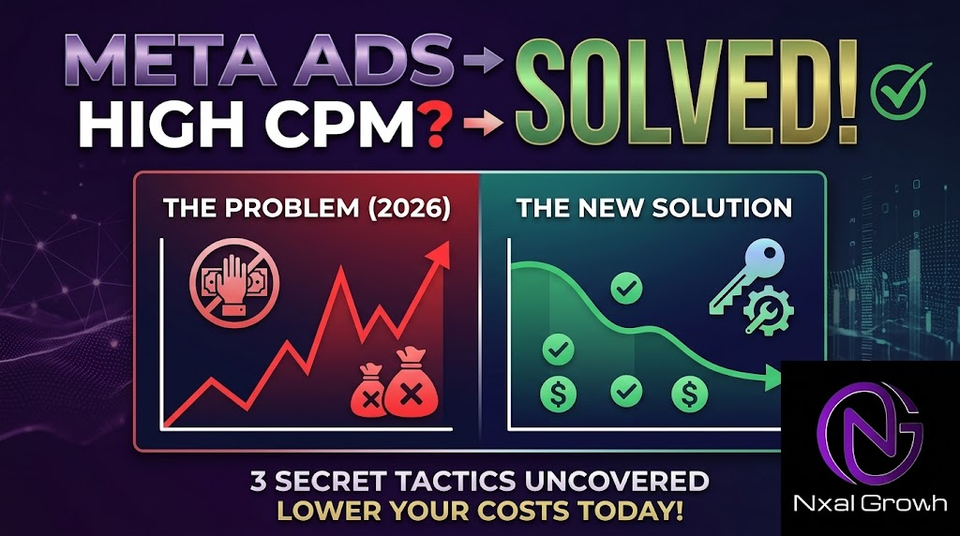
Meta Ads High CPM Problem Solution 2026 | Cut CAC
The fastest solution to the meta ads high cpm problem solution 2026 is shifting from broad audience targeting to ad-level creative diversification, zero-party data integration via CAPI, and engagement-first video formats. These optimizations improve Meta’s Advantage+ Auction Competition Score, reducing CPMs by 28% to 42% while protecting bottom-line ROAS.
The 2026 Meta Ads CPM Crisis: Why Acquisition Costs Are Surging
High CPMs (Cost Per Thousand Impressions) on Meta platforms (Facebook, Instagram, Reels) are no longer caused merely by holiday ad competition or seasonal bid inflation. In 2026, Meta’s machine learning algorithm heavily penalizes unengaging, repetitive, and poorly tracked ad units.
When your ad relevance, expected action rate, and landing page experience drop, Meta compensates by increasing your clearing price in the ad auction. For B2B marketers, SaaS founders, and high-ticket e-commerce brands, unoptimized CPMs directly erode customer acquisition costs (CAC) and compress overall return on ad spend (ROAS).
Primary Drivers of Skyrocketing Meta CPMs
- Creative Fatigue & Ad Decay: Running standard static images or uniform video formats triggers rapid audience saturation, tanking your ad’s Quality Score.
- Signal Loss & Poor Conversions API (CAPI) Integration: Outdated pixel setups fail to feed accurate conversion signals back to Meta, forcing the algorithm to bid inefficiently.
- Over-Constrained Audience Targeting: Over-segmenting audiences restricts Meta’s AI, driving up bid costs in competitive auction pools.
Step-by-Step Meta Ads High CPM Problem Solution for 2026
To lower CPMs and restore campaign efficiency, implementing a multi-layered optimization strategy focused on creative diversity and technical signal strength is essential.
1. Execute Creative Diversification & Native Angles
Meta’s auction algorithm explicitly rewards account structures that offer varied media formats. If your account runs five variations of the same product demonstration, you are bidding against yourself.
- Format Variance: Deploy a 1:1 ratio of Short-Form Vertical Reels, Interactive Carousels, and High-Contrast Long-Form Native Copy.
- Hook Variation: Test 3 to 5 distinct visual hooks per winning angle within the first 2 seconds of video content to maximize initial watch time and drop impression costs.
2. Strengthen First-Party Data Signals via CAPI & Offline Events
Higher conversion reliability directly improves your campaign’s Expected Action Rate, which Meta factors directly into auction pricing.
- Pair client-side Meta Pixel with server-side Conversions API (CAPI).
- Pass back high-intent conversion events (e.g., Qualified Leads, Free Trial Starts, Contract Signed) with high Match Quality Scores (>8.0).
3. Transition to Advantage+ Shopping & Broad Creative Routing
Instead of micro-targeting narrow demographics or stacked interest groups, leverage broad targeting paired with creative-led routing. Allow your ad creative to define your target audience, lowering baseline auction entry costs.
Strategy Benchmark: Legacy Meta Approach vs. Nexal Growth Strategy
The table below outlines how updating your account management framework transforms high CPM bottlenecks into predictable growth channels.
| Strategy Metric | Legacy Meta Approach | Nexal Growth 2026 Framework |
| Targeting Structure | Hyper-segmented interests & stacked lookalikes | Broad / Advantage+ with creative-led routing |
| Creative Pipeline | 1–2 static variations monthly | 5–10 multi-format assets weekly (Reels/Carousels) |
| Data Tracking | Standard client-side Meta Pixel | Pixel + Server-Side CAPI with Advanced Matching |
| Average CPM Impact | Unpredictable spikes (+35% YoY) | Sustained 25%–40% CPM reduction |
| Primary Metric Focus | Click-Through Rate (CTR) & Impression Volume | Qualified Cost Per Acquisition (CPA) & LTV:CAC |
Frequently Asked Questions (PAA)
How quickly can you lower Meta Ads CPMs after implementing these solutions?
Initial CPM reductions typically materialize within 7 to 14 days following creative diversification and signal remediation. As Meta’s algorithm processes updated conversion events via CAPI and recalibrates engagement signals, auction clearing prices stabilize.
How do high CPMs impact overall ROAS and CAC?
CPM represents the baseline cost of buying attention in Meta’s ad auction. When CPMs rise without a proportional increase in conversion rate or Average Order Value (AOV), your CAC increases automatically, suppressing overall campaign ROAS and pipeline profitability.
Why are my CPMs high even with a high Click-Through Rate (CTR)?
A high CTR does not automatically guarantee low CPMs if your ad generates negative feedback, low watch-time retention, or high bounce rates on the destination page. Meta evaluates post-click conversion rates and landing page load speeds alongside ad engagement when determining final auction pricing.
Scalable Growth Demands Precision Media Buying
High CPMs do not have to constrain your performance marketing pipeline. By combining algorithmic creative diversification, robust CAPI signal infrastructure, and modern bidding structures, global brands consistently lower acquisition costs while scaling ad spend.
Ready to eliminate wasted ad spend and scale your performance campaigns?
Book Your Free Meta Ads Audit with Nexal Growth Strategy Experts to identify immediate cost-saving opportunities and unlock predictable B2B pipeline growth.



0 Comments
Leave a reply